Project Insight: How Monocoque Design Reduced Cabinet Weight by Up to 30% in Business Aviation
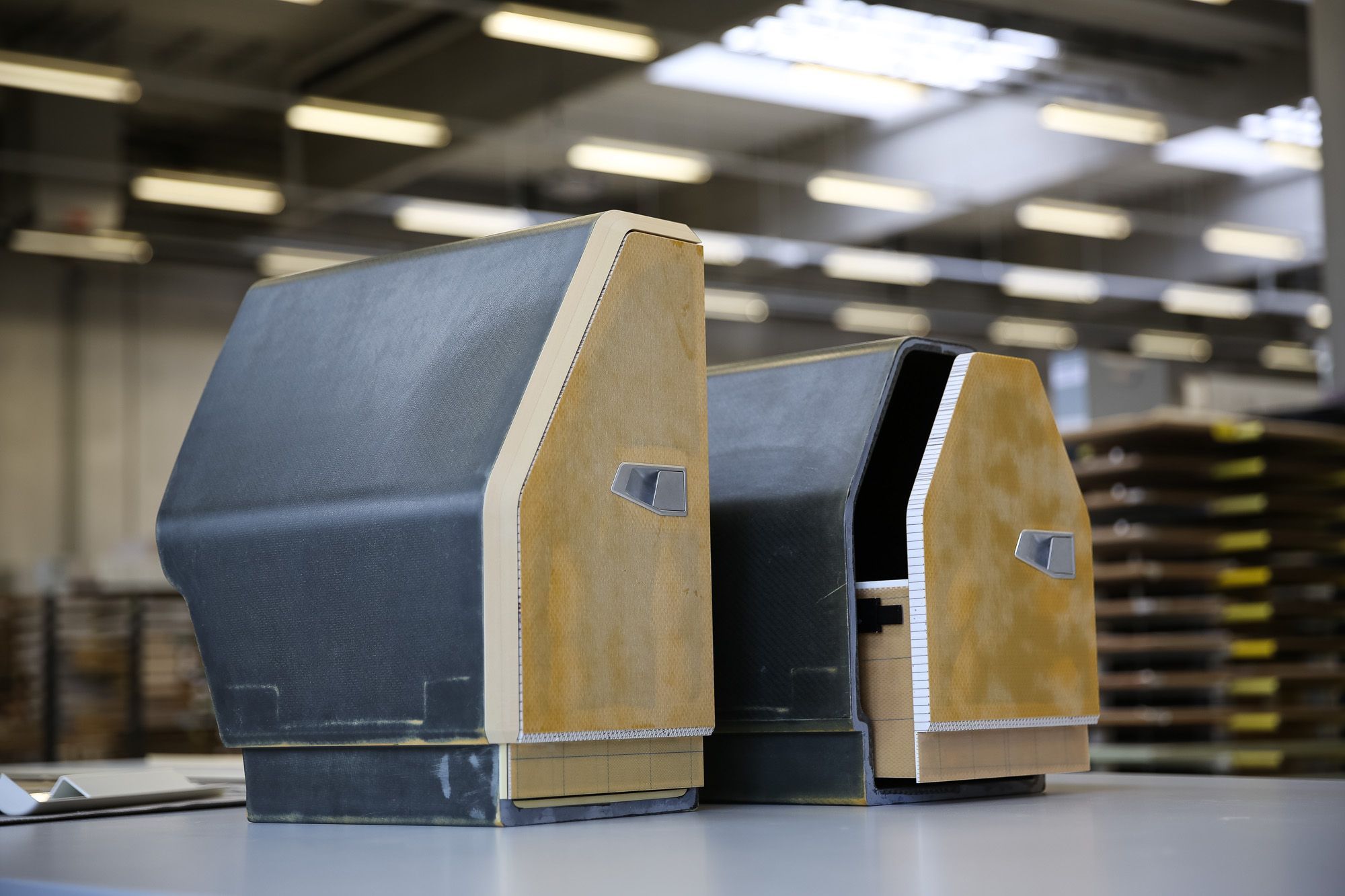
The requirement was clear: reduce the structural weight of the cabinet substantially, maintain the required stiffness, and ensure full integration into the aircraft’s interior concept. This could not be achieved through conventional build-up logic alone. It required a different structural approach for lightweight aircraft interiors and highly integrated aviation cabin interior components.
In aircraft interiors, weight is not treated as a secondary packaging parameter. It directly affects payload margin, integration freedom and the structural logic of the surrounding system. Any component that adds unnecessary mass reduces flexibility elsewhere, whether in cabin layout, functional integration or overall programme balance. This is especially relevant in business jet cabin systems, where low weight and structural efficiency must be resolved without weakening performance.
This is where design freedom becomes a technical question rather than a stylistic one. It depends on how efficiently structure, weight and integration are resolved as one system. A component may appear convincing in geometry and surface, but if its architecture relies on excessive substructure, too many interfaces or avoidable fastening logic, the result is not lightweight efficiency. It is added complexity within the logic of aircraft composite structures.
The following case shows how this can be addressed differently. In a business aviation programme, the cabinet was not developed as an isolated interior element, but as part of a wider structural and visual concept. The outcome was not simply less weight. It was a more efficient architectural answer.
Project Context: Lightweight Cabinet Architecture in Business Aviation
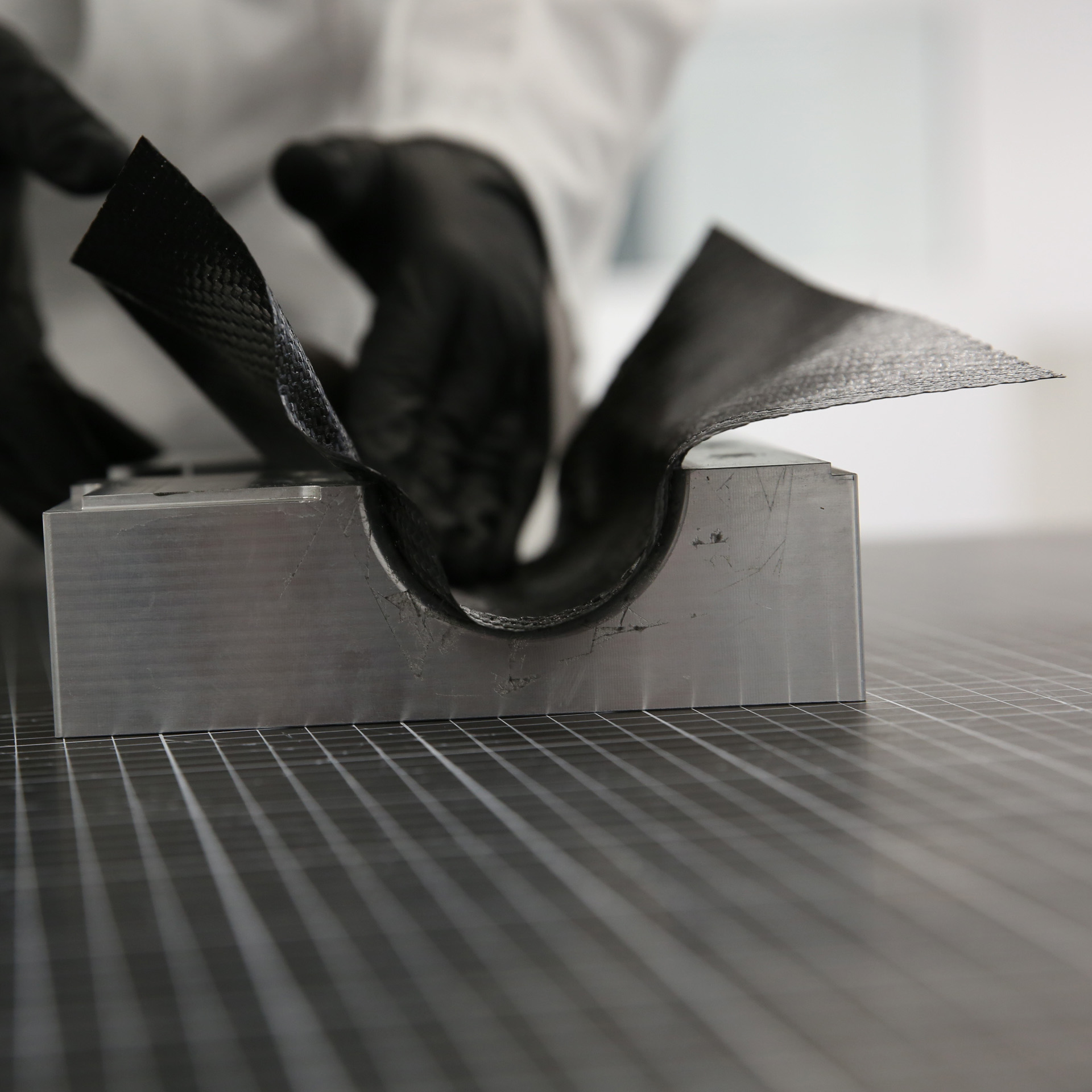
Ultra-lightweight cabin systems are not the result of a single “magic” material. They come from a specific blend of materials and design decisions. A composite competence center that works as a boutique composite manufacturing partner for aviation and premium markets approaches projects from a system perspective:
The project originated in a business aviation context with a clearly defined mass target for the cabinet. A conventional multi-part solution would have added too much structural weight to the overall system and would have reduced the available margin elsewhere in the aircraft.
At the same time, the component was never intended to function as a purely technical lightweight aircraft cabin part. It had to fit into the wider interior concept of the aircraft, both structurally and visually. This meant that weight reduction, stiffness and surface integration had to be resolved together from the beginning.
The cabinet therefore had to meet three requirements at once:
- substantially lower structural weight
- the required stiffness and robustness for its function
- visual and material alignment with the overall cabin concept
This combination defined the brief. The task was not to optimise an existing part incrementally, but to develop a more efficient structural answer within the logic of the aviation cabin interior component as a whole.
How Up to 30% Weight Reduction Becomes Possible Without Losing Stiffness
The structural answer was based on a monocoque approach.
By reducing the number of individual parts, overlap zones and mechanical interfaces, the cabinet architecture became structurally more efficient. Mass was no longer accumulated in redundant substructures, but concentrated where it contributed to load transfer and stability. The result was a significantly lighter solution with weight savings of up to 30% compared with a more conventional built-up concept for lightweight aircraft cabin parts.
What made this possible was not the use of composites alone. It was the way the structural task was redistributed. The monocoque logic allowed stiffness to be generated through the architecture of the part itself rather than through additional supporting elements.
This is where the lightweight effect became measurable. The cabinet was not made lighter by simplification alone. It was made lighter by giving the structure a more efficient role. That does not mean every component should be designed as a monocoque. But where the geometry, load case and programme logic allow it, monocoque architecture creates a more efficient structural answer than a conventional assembly of separate panels and supports in business jet cabin systems.

Design Integration Through COMPOSITE DECOR
The cabinet was not intended as a purely structural lightweight component. It also had to align with the overall business jet interior concept of the aircraft.
That requirement changed the design task. Weight reduction alone was not enough. The component had to contribute to a coherent material and surface language within the cabin, without separating visual intent from engineering logic.
This is where COMPOSITE DECOR became part of the solution.
Rather than defining the visible surface as an afterthought, the cabinet was developed on the basis of its lightweight structural concept and subsequently complemented by an additional visible surface layer. This allowed the component to remain within the logic of the LIGHTWEIGHT SOLUTION while supporting the intended interior concept, whether through visible carbon, wood veneer or other decorative surface finishes.
The cabinet was therefore not developed as an isolated technical part, but as an element integrated into the visual concept of the aircraft. COMPOSITE DECOR supported the intended material expression of the interior, while structural and visible layers were considered together rather than in sequence. In this way, lightweight design and design continuity were resolved within one component concept.
The result was a cabinet that reduced structural weight while remaining fully aligned with the surrounding interior architecture. That is where the solution moved beyond pure lightweight engineering and became part of the aircraft’s overall design language through decorative carbon surfaces and controlled surface finishes.

Conclusion
This project shows that meaningful weight reduction in aircraft interiors does not begin with material substitution alone. It begins with structural logic.
By rethinking the cabinet as a monocoque-based solution, it became possible to reduce structural weight significantly while maintaining the stiffness required for its function. At the same time, the component was developed as part of the wider interior concept rather than as an isolated lightweight part. This allowed structural efficiency and visual integration to be resolved within the same design approach.
That is ultimately where freedom of design becomes real in aerospace interiors: when weight, stiffness and design language are developed as one system instead of being solved separately.
.jpg)

Ready to shape your next statement?
We bring your vision to life through tailored solutions
Connect
Share your unique idea
We'll handle the complexity
8650 Kindberg
Send us your inquiry